
Introduction
Choosing the right aviation degree can be challenging when students want more than classroom knowledge—they also need practical skills, career guidance, and a clear path toward employment. BSc Aviation with Placement Assistance combines aviation-focused education with career support to help students prepare for opportunities across airports, airlines, ground handling, passenger services, and aviation operations. India’s aviation sector is expanding steadily: Indian airports handled about 400.95 million passengers in 2024, an 8.41% increase from 2023, according to the Ministry of Civil Aviation. This growth highlights the importance of trained aviation professionals. From understanding potential job roles to developing communication and industry skills, choosing the right BSc Aviation programme can help students prepare more confidently for the evolving aviation industry and explore diverse career opportunities. Ready to Build Your Aviation Career? Explore aviation training with practical learning, career guidance, and placement assistance at Logica Aviation. Take the next step toward your aviation career today.
Why Choose BSc Aviation for an Aviation Career?
India’s aviation sector continues to expand, creating demand across airports, airlines, cargo, ground handling and aviation services. Indian airports handled 400.95 million passengers in 2024, up 8.41% from 2023, according to the Ministry of Civil Aviation. A BSc Aviation in chennai can help students connect academic learning with practical career preparation. The course can build aviation knowledge, communication skills and workplace readiness while career support can help students understand job requirements and recruitment processes. For students interested in airport or airline careers, the degree also provides a structured way to explore different aviation roles and develop relevant professional skills.
Industry-Focused Academic Learning
Aviation employers need professionals who understand how airports, airlines and passenger services work together. A BSc Aviation in chennai can give students a structured foundation in aviation operations, airport management, safety, customer service and airline processes. This academic foundation matters because India’s aviation network continues to grow. The country had 164 airports as of 2026, compared with 74 in 2014, according to IBEF.
Students can connect classroom concepts with practical aviation scenarios, helping them understand how the industry operates.
Key learning areas may include:
- Airport operations
- Airline management
- Aviation safety
- Passenger handling
- Ground operations
- Aviation regulations
- Customer service
This industry-focused approach can help students build knowledge that aligns with different aviation career paths.
Development of Professional Skills
Aviation careers require more than academic knowledge. Aviation course in chennai professionals often interact with passengers, colleagues, airline teams and airport service providers, so communication and teamwork matter. India’s aviation sector supports employment across airlines, airports, cargo and related services; IBEF cites around 7.7 million aviation-related jobs in India.
A BSc Aviation programme can help students develop practical workplace skills such as:
- Clear communication
- Customer-service skills
- Team coordination
- Problem-solving
- Time management
- Professional grooming
- Workplace etiquette
- Situational awareness
Placement assistance can complement these skills through resume guidance, interview preparation and career counselling. Students should also check what specific career-support services an institution actually provides before enrolling.
Exposure to Airport and Airline Operations
Understanding real airport operations can make aviation education more practical. Students can learn how different teams coordinate passenger movement, baggage handling, check-in, boarding, ground services and flight operations. India’s airports handled 3691.36 thousand metric tonnes of freight in 2024, a 14.59% increase from 2023, showing the scale of activity beyond passenger travel.
For example, practical exposure may help students understand:
- Check-in: How staff verify passengers and process boarding requirements.
- Ground handling: How teams coordinate aircraft turnaround and ground services.
- Passenger services: How professionals assist travellers with queries and airport procedures.
- Cargo operations: How teams manage air-freight movement and documentation.
Such exposure can help students connect classroom concepts with the day-to-day operations they may encounter in aviation careers.
What Does Placement Assistance Include?
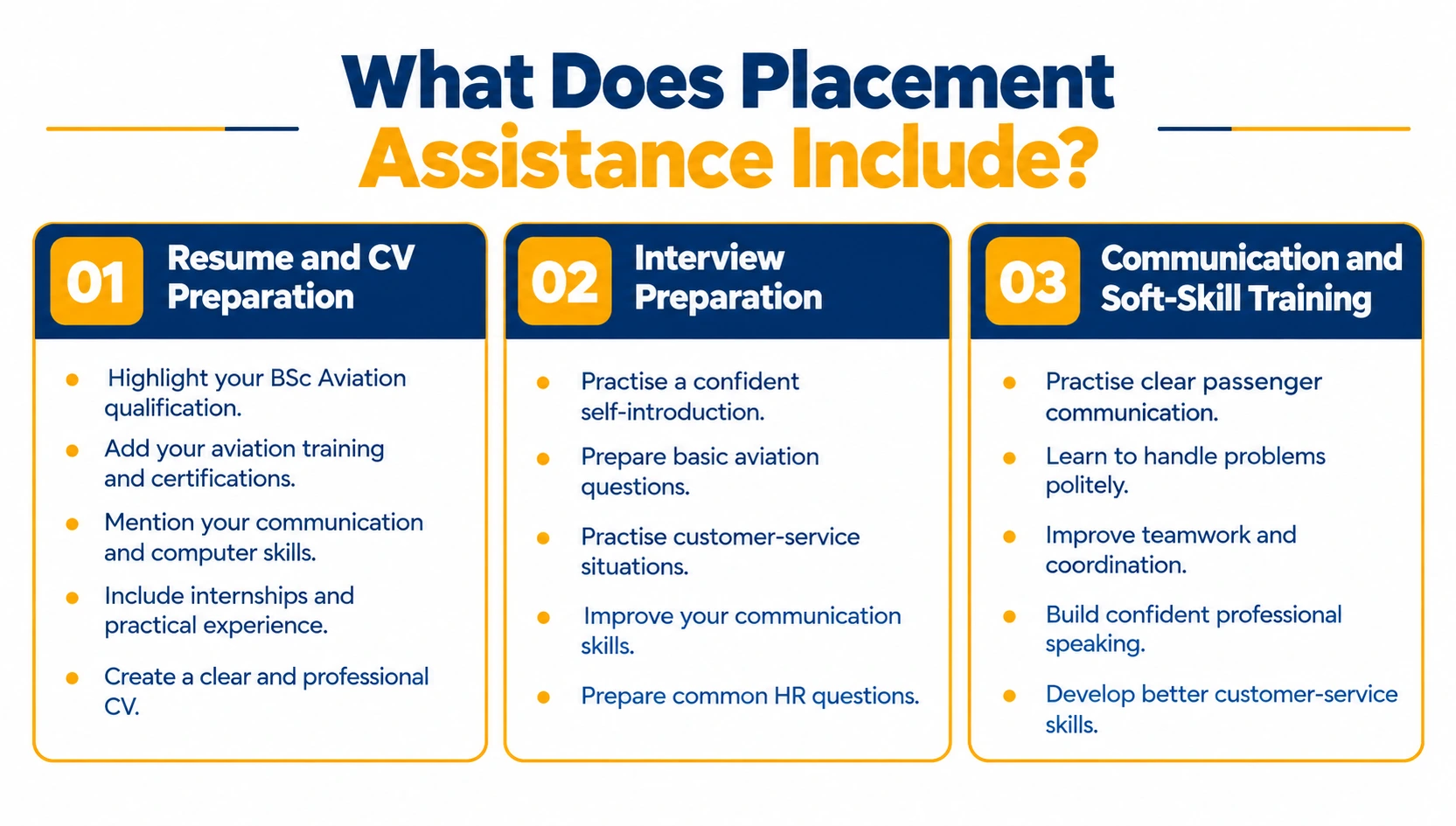
Placement assistance connects your academic learning with the practical steps needed to enter the aviation industry. It can include resume support, interview preparation, communication training, career counselling and guidance on relevant job opportunities. This support matters as India’s aviation sector continues to expand. Passenger traffic reached 420.09 million in FY26, according to IBEF, while India’s airport network has grown from 74 airports in 2014 to 164 in 2026. A BSc Aviation with Placement Assistance can help students understand employer expectations and prepare for recruitment processes. However, students should check exactly what an institution offers because placement assistance does not automatically mean guaranteed employment.
Resume and CV Preparation
Your resume often creates the first impression before an employer meets you. Placement assistance can help BSc Aviation students create a focused CV that highlights relevant education, aviation skills, certifications, internships and practical exposure. Instead of listing every academic activity, students can present information that matches the role they want.
A useful aviation CV can highlight:
- BSc Aviation qualification
- Airport or airline training
- Communication skills
- Customer-service experience
- Aviation certifications
- Industrial visits or internships
- Computer and operational skills
- Relevant extracurricular activities
Career support can also help students improve formatting, remove unnecessary information and prepare different CV versions for different roles. With India’s aviation sector supporting millions of jobs across related activities, a clear and relevant CV can help candidates present their skills more effectively.
Interview Preparation
Interview preparation helps students turn their knowledge into confident answers. A BSc Aviation with Placement Assistance programme may include mock interviews, common aviation questions, communication practice and guidance on professional behaviour. Students can practise explaining their strengths, handling customer situations and responding to role-specific questions.
India’s aviation industry handled 420.09 million passengers in FY26, highlighting the scale of the sector and the range of customer-facing operations involved. Good interview preparation helps students approach recruitment conversations with clearer answers and stronger professional awareness.
| Interview Area | What Students Can Practise |
|---|---|
| Introduction | Education, interests and career goals |
| Aviation Knowledge | Airport and airline basics |
| Customer Service | Handling passenger concerns |
| Situational Questions | Solving workplace problems |
| Communication | Clear and professional responses |
| HR Questions | Strengths, teamwork and career plans |
Communication and Soft-Skill Training
Aviation professionals interact with passengers, colleagues, security teams, ground staff and airline representatives every day. Strong communication therefore plays an important role in many aviation jobs. A BSc Aviation with Placement Assistance programme can include activities that help students communicate clearly, work in teams and respond calmly to different situations.
For example, students can practise:
- Passenger interaction: Explaining check-in procedures clearly.
- Problem-solving: Responding politely when a passenger misses a connection.
- Teamwork: Coordinating with ground staff during busy operations.
- Professional communication: Speaking confidently during interviews.
- Customer service: Handling questions with patience and clarity.
India’s aviation sector currently supports employment for about 7.7 million people, according to IBEF, across aviation and related activities. Developing communication and interpersonal skills can therefore complement technical aviation knowledge and help students prepare for different workplace situations.
BSc Aviation Career Scope in India
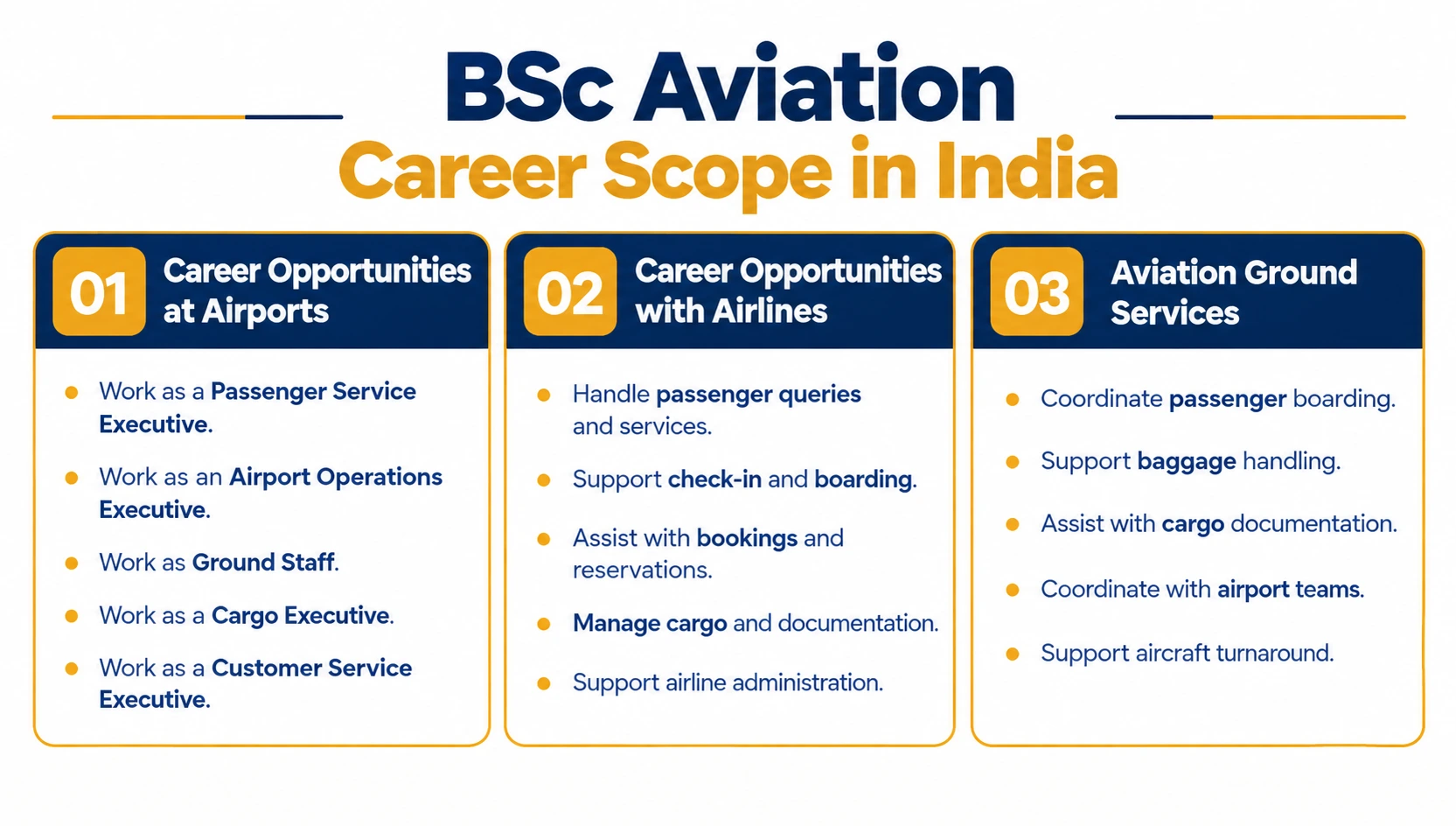
The BSc Aviation with Placement Assistance pathway can open opportunities across airports, airlines, ground handling, cargo, and aviation support services. India’s aviation sector handled 420.09 million passengers in FY26, including domestic and international travel. The country also expanded its airport network from 74 airports in 2014 to 164 in 2026, creating a wider aviation ecosystem.
Graduates can explore roles based on their interests, communication skills, operational knowledge, and employer requirements. Career options can include passenger services, airport operations, airline customer service, ground services, cargo operations, and administrative support. Practical training and career guidance can help students prepare for these opportunities.
Career Opportunities at Airports
Airports offer career opportunities across passenger services, terminal operations, customer support, security coordination, cargo, and administration. India had 164 airports in 2026, compared with 74 in 2014, showing how quickly airport infrastructure has expanded. This expansion supports demand for professionals who understand airport procedures and passenger handling.
After completing aviation studies, graduates can explore roles such as:
- Passenger Service Executive
- Airport Operations Executive
- Ground Staff
- Cargo Executive
- Customer Service Executive
- Airport Administration Assistant
For example, a Passenger Service Executive may assist travellers with check-in and boarding, while an Operations Executive may coordinate terminal activities. Strong communication, teamwork, and problem-solving skills can help graduates handle these responsibilities confidently.
Career Opportunities with Airlines
Airlines provide career paths in customer service, airport coordination, reservations, ground operations, cargo, and administrative functions. India recorded 339.45 million domestic passengers and 80.64 million international passengers in FY26, reaching 420.09 million passengers overall. This passenger volume creates a broad env
| Career Area | Typical Work |
|---|---|
| Customer Service | Passenger queries and service support |
| Ground Operations | Check-in and boarding coordination |
| Reservations | Booking and travel assistance |
| Cargo | Shipment handling and documentation |
| Administration | Office and operational support |
A BSc Aviation with Placement Assistance can help students develop relevant communication, customer-service, and aviation knowledge before applying for suitable airline roles.
Aviation Ground Services
Aviation ground services keep airport and airline activities moving smoothly while aircraft remain on the ground. This area includes passenger handling, baggage coordination, ramp support, cargo handling, aircraft turnaround assistance, and other operational services. India handled 3.96 million metric tonnes of air freight in FY26, showing the scale of activity beyond passenger travel.
For example, ground-service professionals may:
- Coordinate passenger boarding
- Support baggage movement
- Assist cargo documentation
- Coordinate with airport teams
- Support aircraft turnaround activities
A graduate can use aviation knowledge, communication skills, teamwork, and attention to detail in these roles. BSc Aviation with Placement Assistance can also help students understand job requirements and prepare for interviews in ground-handling and related aviation services.
Start Your Aviation Journey with the Right Guidance
Build industry-relevant skills, improve your communication, and prepare for aviation career opportunities with Logica Aviation.
Conclusion
A BSc Aviation with Placement Assistance can give students a structured path toward careers across airports, airlines, passenger services, ground handling, cargo, and aviation operations. The degree builds aviation knowledge, while practical training, communication skills, interview preparation, and career guidance can help students understand workplace expectations and prepare for suitable opportunities.
Choosing the right training environment also matters. Look for a programme that combines academic learning with practical exposure, skill development, career guidance, and genuine placement assistance. With the right preparation and a clear career goal, students can approach the aviation industry with greater confidence and explore different professional pathways.
Ready to take the next step toward your aviation career? Explore aviation training and career opportunities with Logica Aviation.
Frequently Asked Questions
1. What is BSc Aviation with Placement Assistance?
BSc Aviation with Placement Assistance combines aviation-focused academic learning with career guidance, interview preparation, skill development, and support in exploring relevant job opportunities.
2. What are the career options after BSc Aviation?
Graduates can explore roles in airports, airlines, ground services, passenger services, cargo operations, customer service, and aviation administration.
3. What job roles can I get after completing BSc Aviation?
Common career options include Passenger Service Executive, Airport Operations Executive, Airline Customer Service Executive, Ground Staff, Cargo Executive, and aviation support roles.
4. Is BSc Aviation a good choice after 12th?
BSc Aviation can suit students interested in airport, airline, and aviation-related careers. Students should check the course eligibility, curriculum, practical training, and career support before enrolling.
5. What does placement assistance include in an aviation course?
Placement assistance may include CV preparation, interview practice, communication training, career counselling, job opportunity guidance, and recruitment preparation.
6. Can I get an airport job after BSc Aviation?
Yes. Graduates can apply for suitable airport roles such as passenger service, ground operations, customer service, cargo, and administrative positions, depending on employer requirements.
7. Can BSc Aviation graduates work with airlines?
Yes. Graduates can explore airline-related roles in customer service, ground operations, reservations, cargo, airport coordination, and administrative support.
8. What skills are important for an aviation career?
Communication, customer service, teamwork, problem-solving, time management, professional grooming, and basic knowledge of aviation operations can help students prepare for aviation careers.
9. Does placement assistance guarantee a job?
No. Placement assistance does not guarantee employment. It generally helps students prepare for recruitment and identify suitable opportunities, while selection depends on the employer’s requirements and the candidate’s performance.
10. How can I choose the right BSc Aviation course?
Compare the curriculum, practical training, faculty experience, industry exposure, career guidance, placement assistance, course recognition, fees, and student support before making your decision.