Introduction
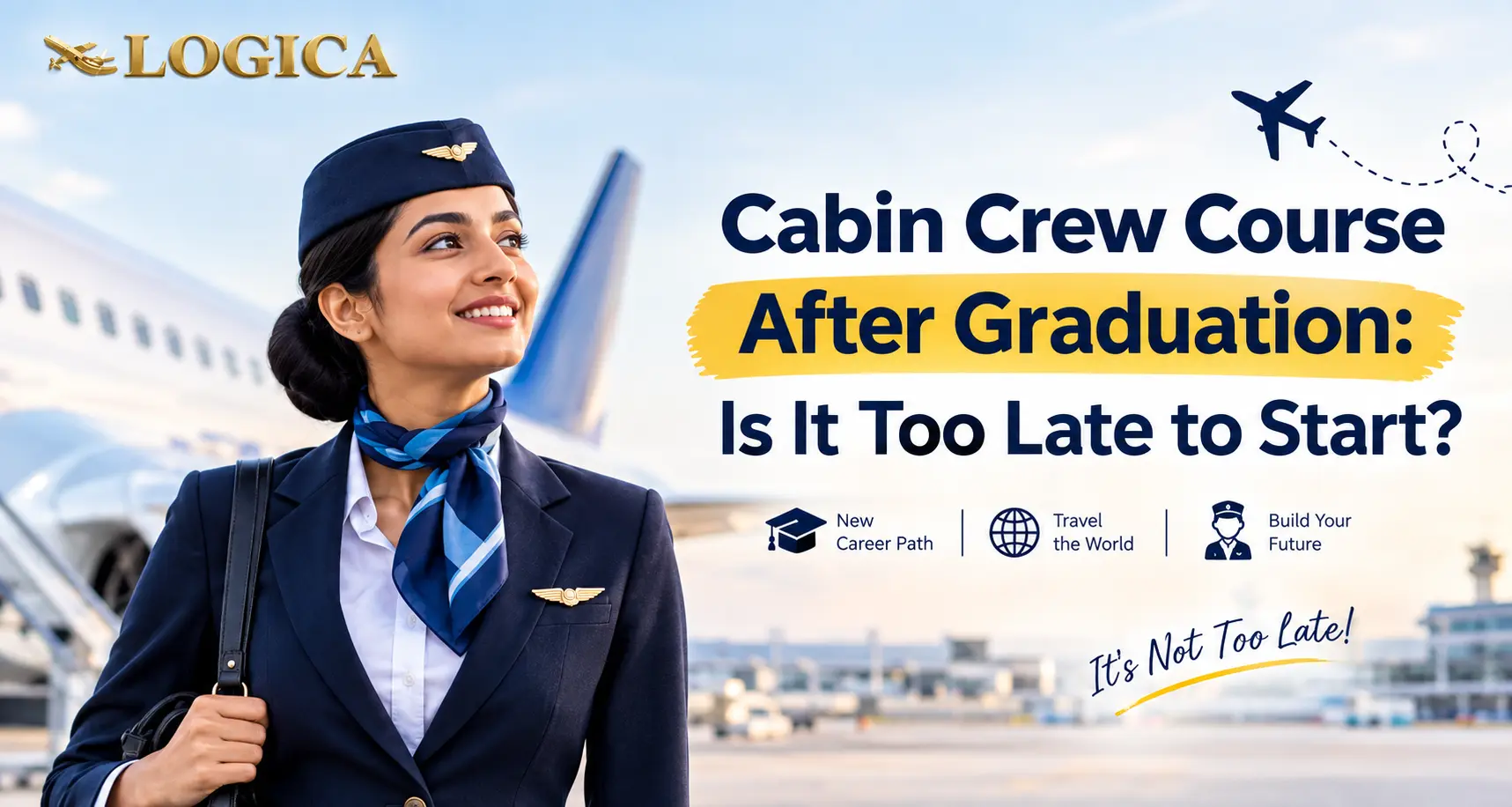
Many graduates consider a career in aviation but wonder whether they are starting too late. If you have already completed your degree, you may ask whether you can still join cabin crew training and apply for airline jobs.
The good news is that graduation does not automatically mean you have missed the opportunity to enter the cabin crew profession. A graduate may already have useful skills such as communication, teamwork, confidence, time management, and experience interacting with different people.
A cabin crew course after graduation can help you understand the aviation industry, develop job-related skills, and prepare for airline recruitment processes. However, eligibility requirements can vary between airlines and roles. Before joining a course, graduates should understand the training, skills, duration, career path, and airline requirements.
Is It Too Late to Join a Cabin Crew Course After Graduation?
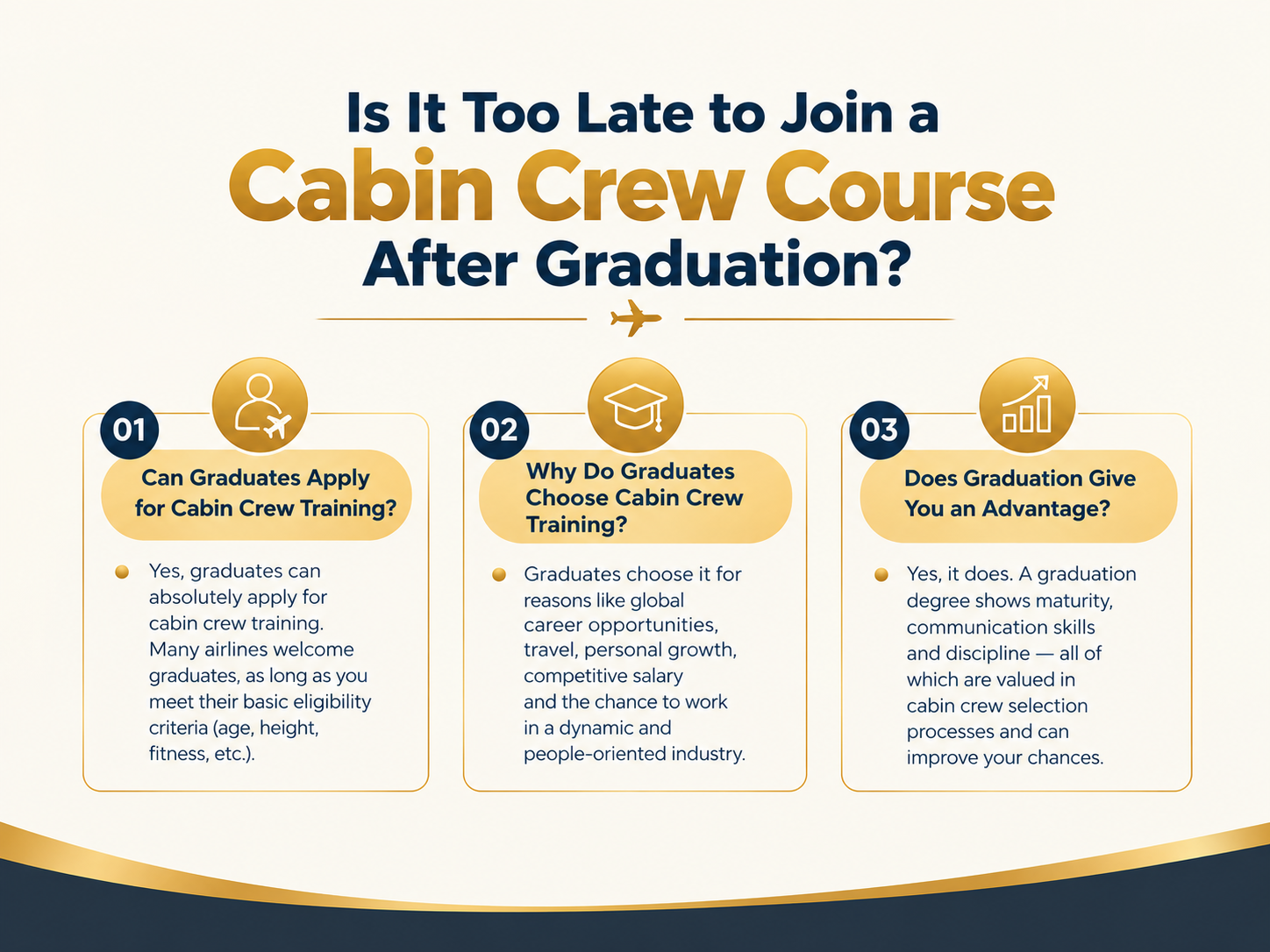
Completing a degree does not automatically prevent you from starting cabin crew training. In fact, graduates from different educational backgrounds may consider cabin crew as a way to move into the aviation industry.
The important point is to check the eligibility requirements of the airlines and training institute you are considering. Requirements can differ depending on the employer and position.
Can Graduates Apply for Cabin Crew Training?
Yes, graduates can consider joining cabin crew training after completing their degree, provided they meet the eligibility conditions of the training institute and the airlines they plan to apply to.
An aviation degree is not automatically necessary for every cabin crew opportunity. What matters is whether you meet the specific requirements related to education, communication, presentation, age, physical requirements, and other criteria set by the relevant airline.
Before paying for a course, graduates should check the latest eligibility requirements of the airlines they are interested in. This helps them choose training that matches their career plans.
| What to Check | Why It Matters |
|---|---|
| Educational qualification | Confirms whether your degree meets the requirement |
| Age requirement | Airline eligibility can vary |
| Communication skills | Important for passenger and team interaction |
| Grooming and presentation | Supports professional cabin crew presentation |
| Airline-specific criteria | Requirements can differ between airlines |
Checking these points before joining a course can help graduates understand the recruitment criteria and plan their training accordingly.
Why Do Graduates Choose Cabin Crew Training?
Graduates may choose cabin crew training for several reasons. Some may want to enter the aviation industry after completing a different degree, while others may be interested in a customer-focused and travel-oriented career.
A structured course can introduce students to areas such as aviation fundamentals, cabin safety, passenger handling, communication, grooming, and customer service.
For graduates, training can also provide an opportunity to improve professional presentation and become more familiar with the expectations of cabin crew recruitment.
Does Graduation Give You an Advantage?
A degree does not guarantee cabin crew selection, but the skills developed during graduation can be useful in the profession.
For example, graduates may have experience with presentations, teamwork, time management, academic projects, communication, and meeting deadlines. These skills can support professional interaction with passengers and colleagues.
However, candidates still need to meet the specific requirements of the airline and perform well during the recruitment process. Graduation should therefore be viewed as an educational foundation rather than a guarantee of selection.
What Should Graduates Know Before Joining a Cabin Crew Course?
Before joining a course, graduates should understand exactly what the training includes. A useful programme should cover relevant aviation and cabin crew topics rather than focusing only on appearance or interview preparation.
It is also important to understand the skills required for the job and how long the training may take. Course duration, subjects, practical training, and preparation methods can vary between institutes.
What Subjects Are Covered in a Cabin Crew Course?
A cabin crew course may cover several areas related to airline operations and passenger service. Common subjects can include:
- Aviation fundamentals
- Cabin safety procedures
- Emergency procedures
- First aid
- Passenger handling
- In-flight service
- Communication skills
- Customer service
- Grooming and professional presentation
- Interview preparation
These subjects can help graduates understand the responsibilities of cabin crew members and prepare for professional situations they may encounter during airline recruitment and training.
What Skills Are Important for Cabin Crew?
Cabin crew members interact with passengers, colleagues, and other aviation professionals, so both technical knowledge and interpersonal skills are important.
Some useful skills include:
| Skill | Why It Matters |
|---|---|
| Communication | Helps with clear passenger and team interaction |
| Customer service | Supports a positive passenger experience |
| Teamwork | Helps crew members work together effectively |
| Confidence | Useful when handling passengers and professional situations |
| Problem-solving | Helps respond to unexpected situations |
| Grooming | Supports professional presentation |
| Time management | Helps manage duties within operational schedules |
| Adaptability | Helps handle different people and situations |
Graduates may already have some of these skills through education, internships, projects, or previous work experience. Training can help them apply those skills in an aviation environment.
How Long Does a Cabin Crew Course Take?
There is no single duration that applies to every cabin crew course. The length can depend on the institute, programme structure, subjects covered, and amount of practical training.
Some programmes may focus on a broader range of aviation and professional skills, while others may have a shorter or more specific structure.
Before enrolling, graduates should ask the institute for the complete course schedule. Understanding the duration beforehand can help you plan your time and compare different programmes based on their curriculum and training approach.
What Is the Career Path After a Cabin Crew Course?
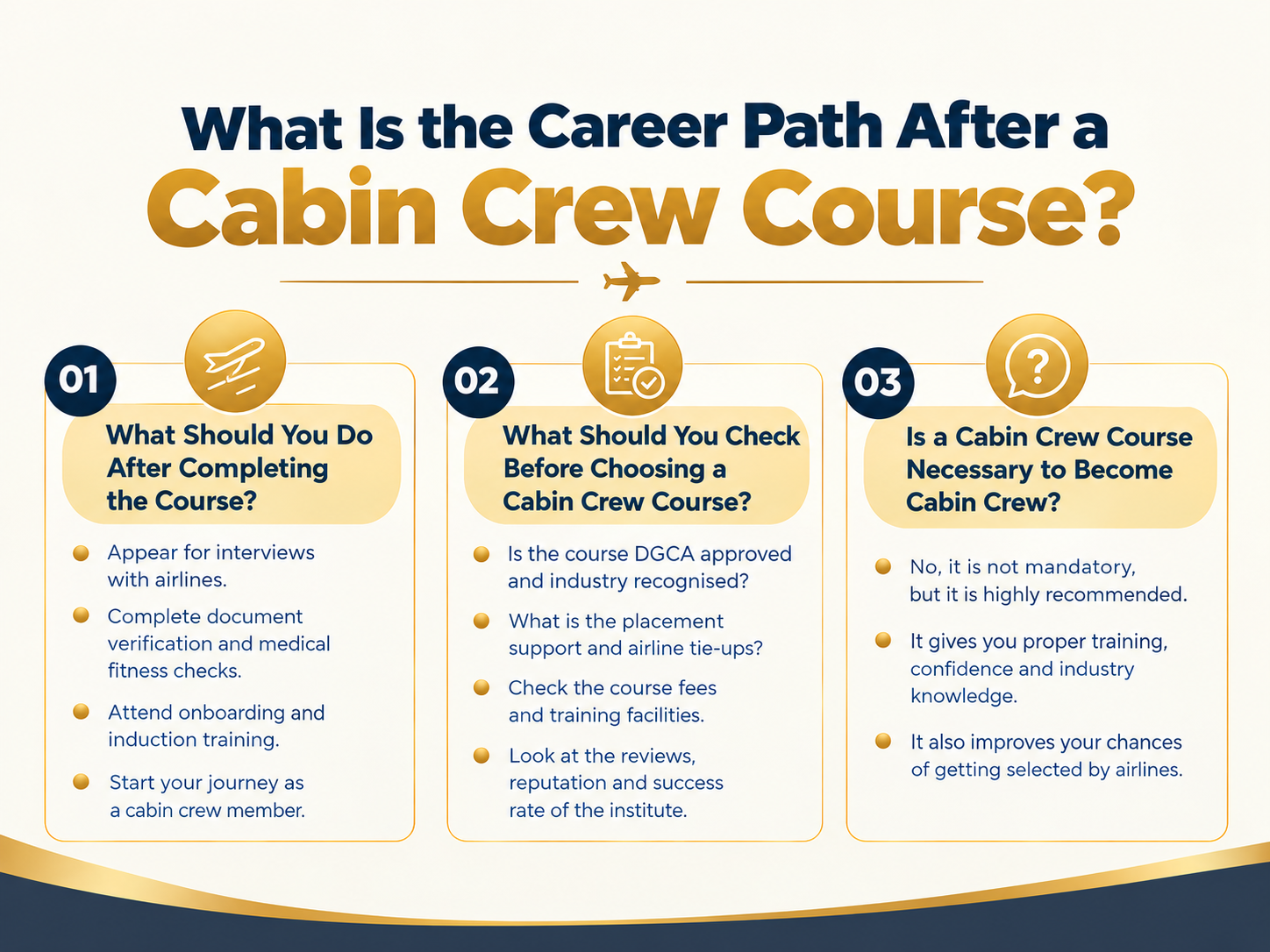
Completing a cabin crew course is a preparation step rather than a guarantee of employment. After training, graduates need to continue developing their skills and apply for suitable airline recruitment opportunities.
A simple career path can look like this:
Graduation → Eligibility Check → Cabin Crew Training → Skill Development → Interview Preparation → Airline Recruitment → Selection Process → Cabin Crew Career
The exact process can vary depending on the airline and recruitment method.
What Should You Do After Completing the Course?
After completing your training, focus on preparing for actual recruitment opportunities.
You can:
- Update your resume with relevant skills and training.
- Monitor airline career pages for vacancies.
- Check whether you meet the eligibility criteria before applying.
- Practise common cabin crew interview questions.
- Continue improving communication skills.
- Maintain professional grooming and presentation.
- Keep important educational and personal documents ready.
- Attend suitable recruitment drives when available.
Completing the course is only one part of the process. Continuous preparation can help you approach airline recruitment more confidently.
What Should You Check Before Choosing a Cabin Crew Course?
Graduates should compare a course carefully before making a decision. Instead of choosing only based on advertisements or course fees, look at the complete training structure.
Important factors include:
- Course curriculum: Check whether the programme covers relevant aviation and cabin crew subjects.
- Trainers and training method: Understand who provides the training and how classes are conducted.
- Course duration: Compare the duration with the subjects and practical training included.
- Placement support: Understand exactly what type of career or recruitment support is provided.
- Total course fees: Check the complete cost and whether additional charges apply.
- Student reviews and background: Research the institute and look for reliable information about its training experience.
These points can help graduates compare programmes more carefully before enrolling.
Is a Cabin Crew Course Necessary to Become Cabin Crew?
A private cabin crew course is not automatically required for every airline. Airline recruitment requirements can vary, so candidates should always check the specific requirements of the airline they want to apply to.
However, structured training can still be useful for graduates who want to understand cabin crew responsibilities and develop relevant skills before applying.
A course may provide exposure to areas such as safety procedures, passenger handling, communication, grooming, and interview preparation. The decision should therefore depend on your existing skills, knowledge, career goals, and the requirements of the airlines you are targeting.
Conclusion
Starting a cabin crew course after graduation is not automatically too late. Graduates from different educational backgrounds can explore cabin crew opportunities if they meet the relevant eligibility requirements.
Your degree can provide useful transferable skills such as communication, teamwork, confidence, time management, and professional discipline. At the same time, cabin crew training can help you understand aviation-related responsibilities and prepare for airline recruitment.
Before choosing a course, compare the curriculum, duration, training method, fees, student feedback, and placement support. Most importantly, check the latest eligibility requirements of the airlines you want to apply to.